
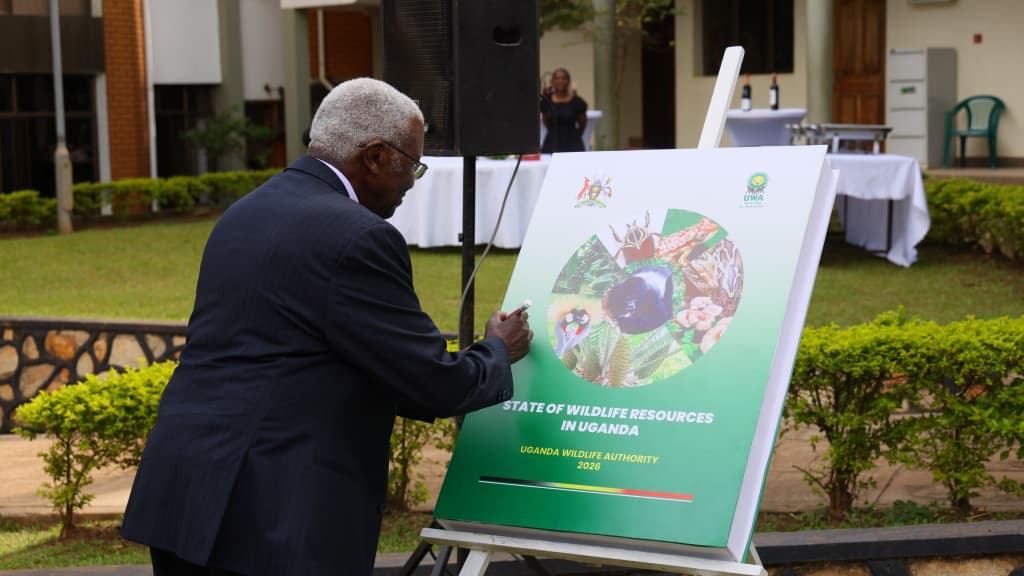
Uganda’s latest national wildlife assessment shows a mixed picture of conservation progress, with several species recovering but others declining amid increasing environmental pressure.
The State of Wildlife Resources in Uganda Report 2026, released by the Uganda Wildlife Authority (UWA), indicates that while populations of animals such as buffalo, hippos and Uganda kob are rising, key species including elephants and lions are registering declines.
According to the report, elephant numbers in monitored protected areas dropped from 6,621 to 6,352, while lion populations fell from 314 to 291.
Conservationists say these declines point to persistent challenges including habitat loss, shrinking prey base and human-wildlife conflict.
At the same time, the report highlights notable recovery in other species under sustained protection.
Buffalo populations rose from 32,235 to 41,548, hippopotamus increased from 8,226 to 9,026, and Uganda kob climbed from 166,526 to 175,109. Waterbucks and zebras also posted significant gains.
Among the strongest recovery trends is the Southern white rhinoceros, whose population increased from 43 to 61, while chimpanzee numbers rose to 6,075. mountain gorilla populations remained stable at 459, maintaining Uganda’s position as a key global conservation hub for great apes.
Despite these gains, the report warns that conservation progress remains fragile due to growing pressure on natural ecosystems.
Uganda supports more than 18,000 species of flora and fauna, but expanding settlements, agricultural encroachment, infrastructure development and extractive activities are steadily reducing available habitat.
The report also identifies invasive species, illegal wildlife use, forest degradation and climate change as major risks.
It further broadens the country’s biodiversity assessment beyond large mammals to include plants, fungi, birds, reptiles, amphibians and invertebrates, underscoring the importance of entire ecosystems in sustaining conservation gains.
Tourism, Wildlife and Antiquities Minister Tom Butime said the findings highlight the need to integrate conservation with development planning.
“This report demonstrates that conservation is not only about protecting wild animals. It is equally about safeguarding plant life, habitats and ecological systems that support livelihoods and economic growth,” he said.
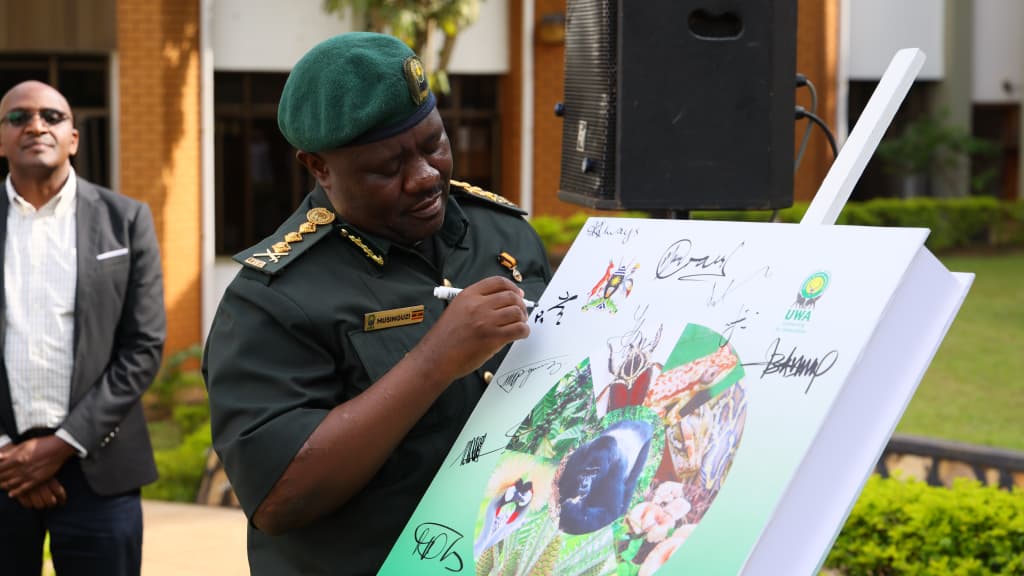
UWA Board Chair James Kalema said the data provides a clear indication of where conservation efforts are working and where urgent action is required.
“This report gives us a measure of where we are seeing returns and where institutional attention must now be intensified,” he noted.
UWA Executive Director James Musinguzi said the report reflects improved monitoring through science and technology, including aerial surveys, ranger tracking systems and ecological databases.
Officials say the findings will guide future conservation policy, with emphasis on habitat restoration, conflict mitigation and long-term investment to protect Uganda’s biodiversity.
